This is the single most common question we get at Merchcraft, and for good reason. Screen printing and embroidery are the two workhorse decoration methods in custom apparel, and they are not interchangeable. Each one is better suited to certain garments, budgets, and design types. Picking the wrong one can waste money or produce a result that does not fit the way the garment will be used.
We work through this decision with every Orange County client before a single piece goes into production. Here is the framework we use.
The quick decision framework
- Choose screen printing for T-shirts, hoodies, tote bags, large graphic designs, and higher-quantity orders with a lower per-unit cost target.
- Choose embroidery for polo shirts, hats, jackets, and garments where durability and a premium finish matter more than color complexity.
That is the rule of thumb. The rest of this guide explains why.
How screen printing works and where it wins
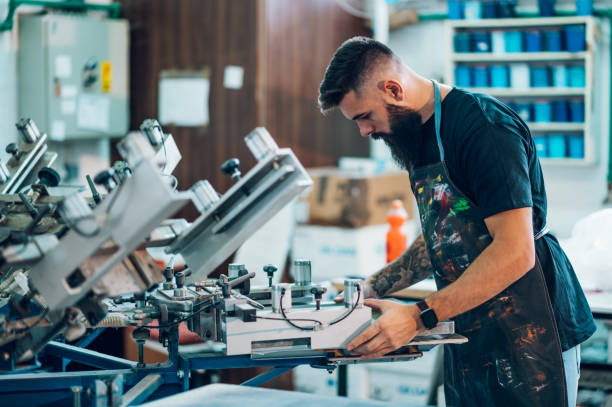
Screen printing pushes ink through a fine mesh screen onto flat fabric, with one screen produced per color. It excels at:
- Large, bold graphics. A full back print, oversized front graphic, or broad visual statement is naturally suited to screen printing.
- Soft, flat garments. T-shirts, tank tops, hoodies, and tote bags take screen printing cleanly because the surface is flat and the ink can integrate with the fabric.
- Lower cost at volume. Once screens are made, the marginal cost per additional piece is low. For larger orders with a controlled color count, screen printing usually wins on price.
- Color blending and gradients. With the right separations and ink system, screen printing can achieve halftones and simulated gradients that embroidery cannot reproduce in thread.
Where it struggles: structured garments like polos and jackets do not always hold a large print as naturally across seams and curved surfaces. The design, garment, ink system, and intended laundering all need to be considered together.
How embroidery works and where it wins
Embroidery stitches a design directly into the fabric using thread, built from a digitized stitch file. It excels at:
- Structured garments. Polo shirts, dress shirts, jackets, and caps are built for embroidery. The stitching sits naturally on a firm surface and holds through years of wear.
- Durability. Thread stitched into fabric does not crack or peel. That makes it a dependable choice for uniforms, outerwear, and headwear.
- Premium perception. The raised, textured quality of embroidery can feel more considered than a flat print, especially on customer-facing apparel.
- Small logo placements. A clean left-chest logo is one of embroidery's signature applications and often looks more resolved there than a small screen print.
Where it struggles: embroidery cannot reproduce photographic images or very fine detail economically. Small text and thin lines may need to be simplified, and large-format graphics become expensive because cost scales with stitch count.
Screen printing vs embroidery at a glance
| Factor | Screen Printing | Embroidery |
|---|---|---|
| Best garments | T-shirts, hoodies, totes | Polos, hats, jackets |
| Design complexity | Large graphics, controlled gradients, fine separations | Simple, bold, stitch-friendly logos |
| Durability | Strong when correctly cured and cared for | Excellent for the life of the garment |
| Cost at low quantity | Higher because of screen setup | Digitizing is a one-time setup, then cost follows stitch count |
| Cost at high volume | Usually lower per unit | Higher per unit because of machine time |
| Visual character | Graphic, flexible, casual to premium | Textured, polished, professional |
When Orange County businesses use both
Most complete apparel programs use both methods for different pieces. A Merchcraft client in Irvine or Newport Beach might order embroidered polos for client-facing staff, embroidered hats for the same team, and screen-printed event tees for a company outing or trade show. Neither method replaces the other. They cover different parts of the wardrobe.
For more specific guidance, see our dedicated guides on screen printing in Orange County, custom embroidery, and DTG printing for full-color small runs.
Not sure which method is right for your order? Share the project with Merchcraft in Santa Ana and we will match the garment, artwork, quantity, and finish to the right production method.