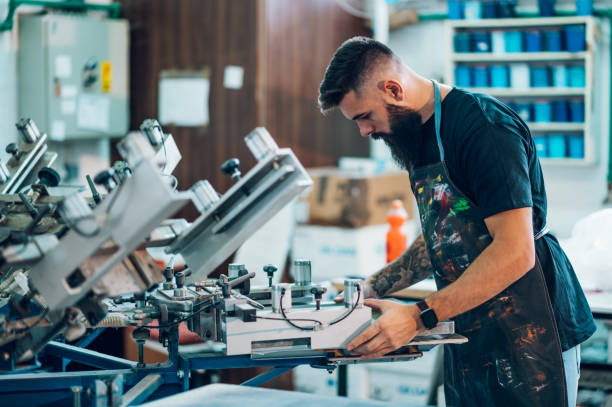
Screen printing is one of the most widely used methods for producing custom apparel. It offers durability, consistency, and the ability to produce high volumes efficiently.
For brands producing merchandise, uniforms, or promotional apparel, screen printing remains the industry standard.
The Screen Printing Process
The process begins with artwork preparation. Designs are separated into individual colors so each layer can be printed individually.
Screens are then created for each color. Ink is pushed through the mesh screen onto the garment using a squeegee, transferring the design onto the fabric.
After printing, garments pass through a curing process that sets the ink and ensures the print remains durable through repeated washing.
Why Screen Printing Works Well for Apparel
Screen printing produces bold colors and consistent results across large runs.
It is commonly used for:
- brand merchandise
- retail apparel
- event shirts
- team apparel
- promotional clothing
Once screens are prepared, production can move quickly, making it cost efficient for larger quantities.
Ink Options and Finishes
Different inks can change how the print looks and feels.
Plastisol inks create vibrant, opaque prints. Discharge inks produce a softer finish by replacing the garment’s dye with pigment.
Choosing the right ink type helps ensure the design looks the way it was intended.
For brands producing apparel regularly, screen printing provides both durability and consistency across runs.